
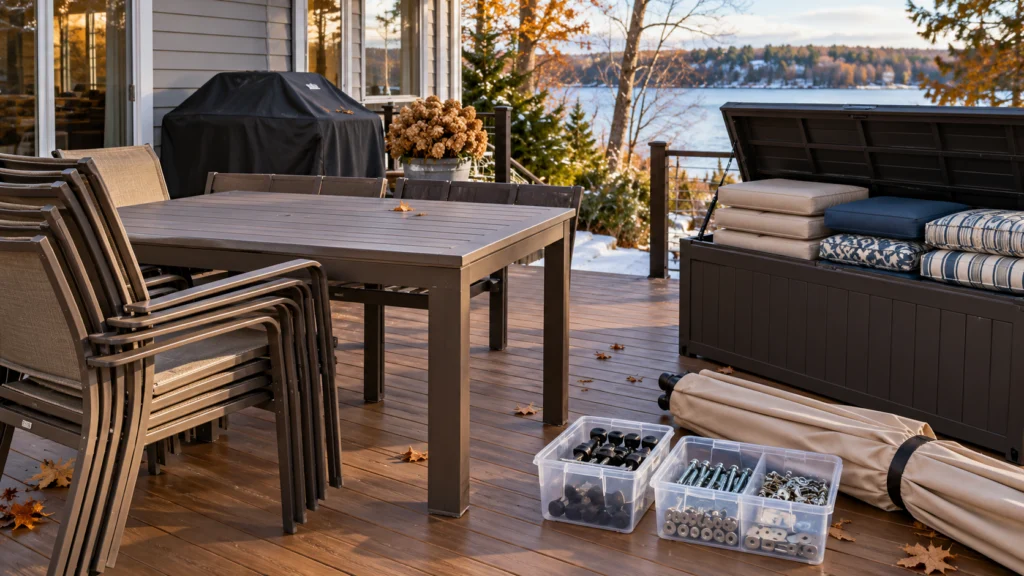
Winter storage should protect furniture without enclosing moisture or blocking the space needed around the house. A cover alone is not a complete storage plan. Read the instructions for the frame, cushions and cover because they may need different handling.
Clean and dry before covering
Use the furniture maker’s approved cleaning method. Let components dry as directed before storage, especially cushions and removable fabric. A tidy stack of damp items can retain the very moisture the cover is meant to exclude.
Inspect for damage, loose hardware and parts needing attention. Record the issue and store small removable components in a labelled container. Do not use winter packing to hide a repair that will make spring setup unsafe.
| Component | Question | Practical action |
|---|---|---|
| Frame | What storage conditions are permitted? | Follow material-specific guidance |
| Cushions | How should they be cleaned and dried? | Store only in suitable dry conditions |
| Cover | What ventilation and fastening are required? | Use the intended product correctly |
| Stack or location | Does it obstruct access or add concentrated load? | Review the deck and household layout |
Keep covers compatible with the arrangement
Follow the cover’s instructions for fastening and use. Avoid improvised weights or attachments to guards. Check the stored arrangement periodically for water accumulation or movement without creating an unsafe reach.
Do not assume that concentrating every item in one deck corner is structurally suitable. Large stacks, planters and storage boxes may change loading. Obtain qualified advice where the arrangement is uncertain.
- Separate components with different storage requirements.
- Keep access to doors, steps and services clear.
- Label hardware and product references for spring setup.
- Review the stored items after significant weather when safe to do so.
Make the spring return straightforward
Store the pieces in a sequence that allows safe retrieval. Heavy items should not require an awkward lift over other furniture. Keep care instructions and repair notes in one place so the first warm day does not become a search for missing fittings.
If a piece is no longer suitable, decide on repair, reuse or appropriate disposal rather than storing it indefinitely. Reducing the collection may be more useful than buying another oversized cover.
Questions and answers
Can a cover go over wet cushions?
Follow the cushion and cover instructions. In general, storage should not conceal dampness; clean and dry components appropriately first.
Is outdoor storage always acceptable?
Not for every product. Check the maker’s temperature, moisture and handling requirements for each component.
Can I tie everything to the railing?
Do not use a guard as an improvised storage anchor. The attachment and loads need an appropriate design.