Outdoor storage can free indoor space, but it adds exposure to weather and can crowd the routes people use every day. Start by deciding what genuinely belongs outside. A bicycle used daily, wet sports gear and a rarely used game set need different arrangements.
Sort the equipment before choosing a container
Separate items by frequency, size and the maker’s storage instructions. Some equipment needs indoor conditions or particular care. A box described as weather-resistant does not automatically provide suitable storage for every product.
Plan a drying stage for wet items. Sealing damp bags or footwear inside a container can retain moisture. Keep the storage method compatible with the equipment and allow cleaning access.
| Option | Useful purpose | Constraint |
|---|---|---|
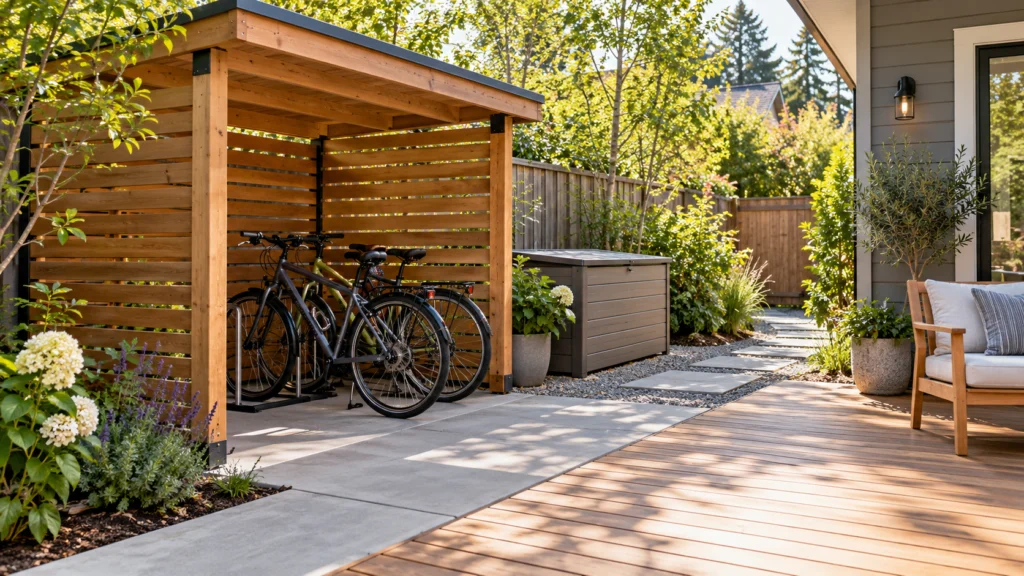
| Accessible bike shelter | Regular bicycle retrieval | Security, clear access and weather exposure |
| Outdoor equipment box | Selected dry accessories | Load, dimensions and lid operation |
| Open drying area | Temporary wet-gear handling | Weather and household circulation |
| Indoor storage | Sensitive or valuable equipment | Space and a practical transfer route |
Place the storage before buying it
Outline the footprint and open-lid space with removable markers. Pull out chairs and walk through the route to steps and doors. A box can fit against a railing yet obstruct the access needed to use it.
Do not fasten storage to guards or other deck components without a suitable professional design. Heavy boxes, accumulated contents and planters may require assessment of the deck structure; empty dimensions are not the same as loaded conditions.
- Check equipment-specific storage requirements.
- Measure the largest item and the route into storage.
- Keep drainage and inspection access available.
- Agree a routine for drying and returning items after use.
Keep security and maintenance separate
A weather cover is not a theft-prevention system. Consider appropriate security for valuable items and keep private details out of public storage labels. The storage should also remain practical enough that people use it rather than leaving equipment beside it.
Review the arrangement at the end of the season. Remove items that are no longer used, clean the container according to its instructions and check for water entry or damaged hinges. A small maintenance routine preserves the usefulness of the whole zone.
Questions and answers
Can every sports bag stay in an outdoor box?
No. Check the contents and their storage instructions. Moisture-sensitive or valuable items may need a different location.
Should a heavy box sit directly against the railing?
Do not assume that is suitable. Access, loading and the deck’s design need to be considered; guards should not become improvised support points.
Is a larger box always better?
Only if it fits the route, loading and actual equipment. Oversized storage can make a small terrace harder to use.