Outdoor lighting has two jobs: helping people see where they move and creating an enjoyable setting. A string of decorative lights may do the second while leaving a step hard to distinguish. Review the route after dark before deciding which fixtures to buy.
Walk the ordinary route in the evening
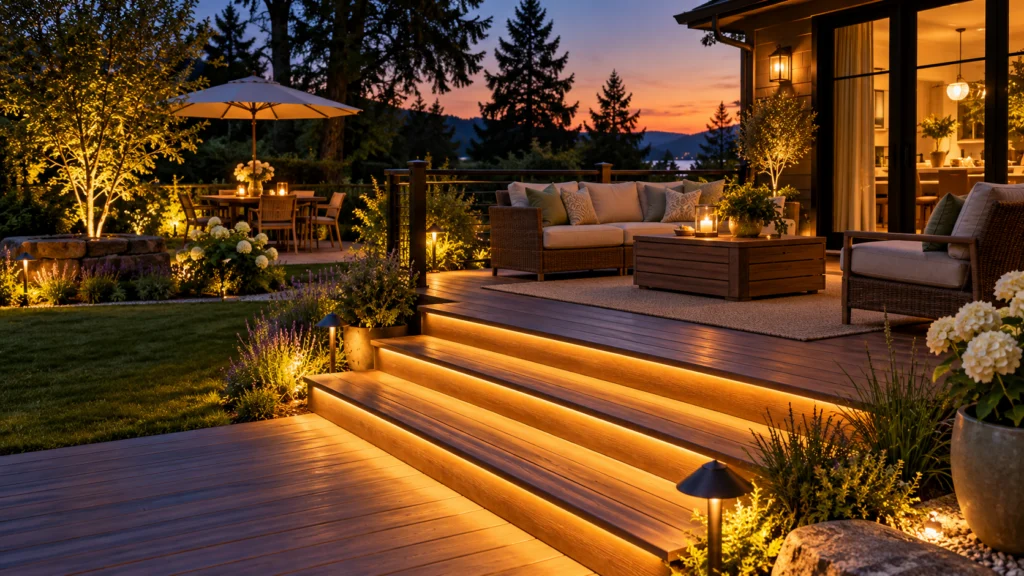
Observe the entrance, changes in level and the path to seating. Check what happens when people stand or sit in the usual positions. A bright source at eye level can make the surrounding area harder to see even while the lamp itself looks impressive.
Note switches and controls. They should be practical to reach without crossing an unlit area. Consider the needs of guests as well as the person who knows every step by memory.
| Zone | Aim | Question |
|---|---|---|
| Steps and transitions | Make changes in level visible | Does glare hide an edge? |
| Door and route | Support ordinary movement | Can controls be reached conveniently? |
| Dining or reading | Provide useful task light | Can people see without a harsh source? |
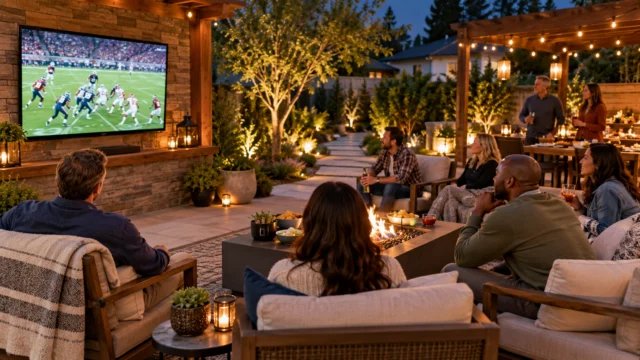
| Decorative area | Create atmosphere | Does it spill unnecessarily towards neighbours? |
Use equipment suited to the location
Follow the product’s outdoor and exposure rating and installation instructions. Do not adapt indoor equipment with improvised coverings. Electrical work and permanent installations require appropriately qualified people and applicable approvals.
Keep cables and connections out of circulation routes and away from inappropriate exposure. A temporary gathering still needs a suitable electrical arrangement. Ask a qualified professional when the available outlets or proposed loads are uncertain.
- Test the route after dark before ordering fixtures.
- Keep task and decorative lighting separately controllable where practical.
- Check glare from every ordinary seating position.
- Aim light where needed and consider neighbouring windows.
Plan maintenance and seasonal changes
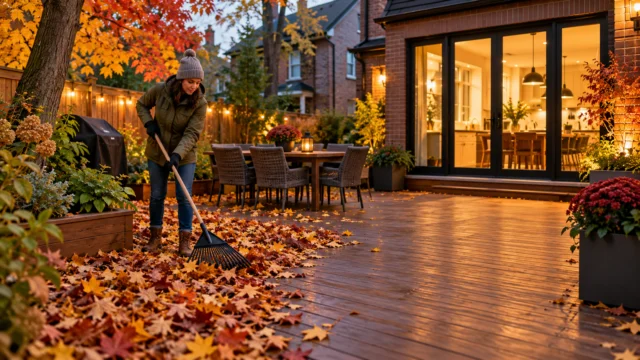
Choose fixtures that can be cleaned and serviced without an unsafe reach. Leaves, snow and moved furniture can change the pattern of light. Recheck the setup when the deck layout changes.
A failed lamp should not leave the only useful route invisible. Discuss a practical arrangement with the installer and retain product details for replacement. Avoid a scheme that depends on inaccessible decorative pieces for essential visibility.
Questions and answers
Are string lights enough for a deck?
They may create atmosphere but do not automatically provide useful light for steps and routes. Assess those areas separately.
Can I use indoor lamps outside for one night?
Use only equipment suitable for the actual outdoor conditions and follow its instructions. A short duration does not remove electrical risks.
Should lighting be as bright as possible?
No. Placement, glare and contrast matter. Aim for useful visibility without unnecessary spill into neighbouring spaces.