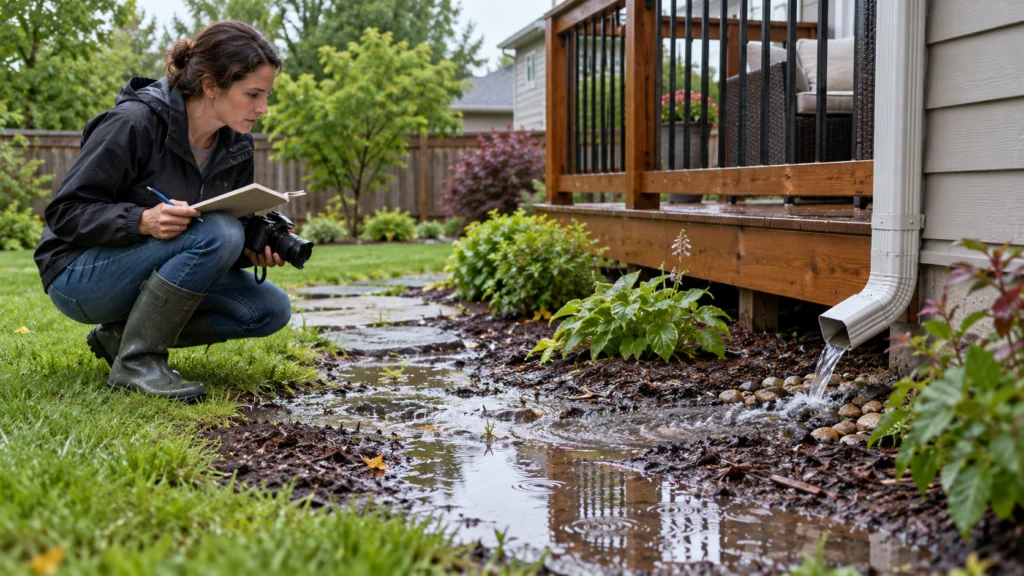
Water observed around a deck can have more than one explanation. Debris, surrounding grading, building drainage and the deck detail may all need consideration. A useful homeowner’s role is to document the pattern clearly and arrange qualified assessment where concerns remain.
Observe the location and timing
Note where water appears, how long it remains and what weather preceded it. Photograph the same area from a consistent position. Include the ground near supports and the connection to the house without entering an unsafe space.
Separate what you see from what you think caused it. “Water remains beside this support after rain” is useful; “the footing has failed” is a diagnosis that a photograph cannot establish.
| Area | Record | Question for a professional |
|---|---|---|
| Deck surface | Persistent wet or debris-filled locations | Is the detail functioning as intended? |
| Ground nearby | Water accumulation and visible changes | Does the surrounding drainage need assessment? |
| House connection | Marks or dampness in the visible area | Is further building investigation needed? |
| Supports | Visible movement or deterioration | Is continued use appropriate? |
Clean only within appropriate limits
Remove ordinary surface debris using the decking maker’s approved method. Do not alter structural gaps, drill drainage holes or excavate around supports as an improvised fix. Those changes can affect the structure or conceal the original evidence.
If the deck moves, components appear deteriorated or water may be entering the building, obtain professional help promptly. Do not wait for the next seasonal cleaning to decide whether the situation matters.
- Keep dates and weather notes with photographs.
- Check whether planters or stored items hide recurring wet areas.
- Retain records of earlier repairs.
- Ask for the proposed cause and repair scope in writing.
Request a diagnosis before a repair quote
A quotation should explain what problem the work addresses. A new coating may improve appearance without resolving the source of water. Ask what observations or assessment support the proposed solution and what remains outside the scope.
Keep access for future inspection. Enclosing the underside or adding storage can make a recurring issue harder to see. A tidy finish is useful only after the underlying condition has been understood.
Questions and answers
Does standing water prove the deck is unsafe?
Not by itself, but it warrants investigation in context. Visible movement or deterioration adds urgency and should be assessed by a qualified professional.
Can I drill extra holes to drain the surface?
Do not improvise structural or product alterations. Follow the manufacturer’s details and obtain professional advice for drainage changes.
Should I cover a damp area with a rug?
That can hide the pattern and hold moisture. Investigate the cause and check product compatibility instead of concealing the area.