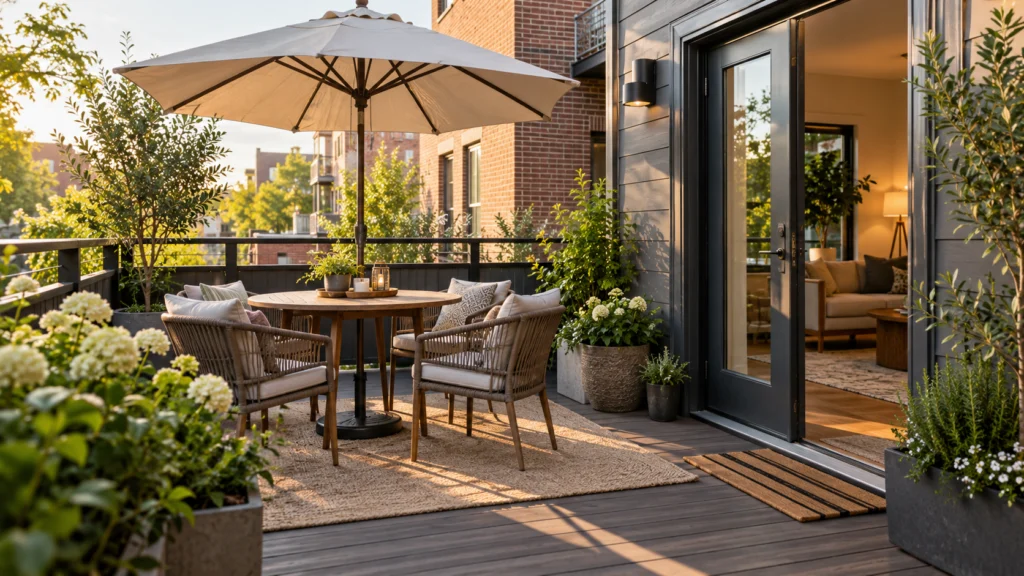
Shade should make a small deck more usable without consuming the space needed to move around it. An umbrella base, a screen or a support post may occupy the very route the furniture needs. Start with the sun and the layout before choosing the object.
Observe when shade is actually needed
Record where sun falls during the hours you normally use the deck. A photograph at one time of day is not a complete guide. Note the seating positions that matter most and whether wind changes how an option can be used.
Test a proposed footprint with removable markers. Include the base, supports and operating movement, not only the shaded area shown in a catalogue. Open doors and pull out chairs during the trial.
| Option | Useful question | Constraint |
|---|---|---|
| Freestanding umbrella | Where does the base sit? | Weight, stability and circulation |
| Wall-related product | What support and installation are required? | Building connection and professional advice |
| Shade screen | What wind exposure does it face? | Secure design and access |
| Permanent structure | What approvals and design apply? | Site-specific structural and planning requirements |
Treat wind and support seriously
Follow the shade product’s operating limits and storage instructions. Do not substitute a convenient railing or planter for a specified base or support. Where a system attaches to the building or deck, obtain a suitable professional design.
Permanent overhead structures can introduce approval and structural questions. Check current requirements with the City and the responsible professional. A small footprint does not automatically make a structure exempt.
- Observe the deck during the intended use hours.
- Mark bases and supports before ordering.
- Keep access and guard areas clear.
- Plan where a temporary shade product goes when not in use.
Keep the layout flexible
A smaller shaded seating zone may work better than trying to cover every board. Position furniture so the priority seats benefit without forcing everyone through a narrow gap. Consider whether the arrangement still works after dark or in cooler weather.
At the end of the trial, list the trade-offs: useful shade, lost floor area, operating effort and maintenance. Choose from that list rather than from the largest advertised canopy size.
Questions and answers
Does a bigger umbrella always give a better result?
No. The base and operating area can crowd a small deck. Match the shade to the seats and routes that matter.
Can I anchor shade to a railing?
Do not assume so. The product and supporting structure need a suitable design; guards are not general-purpose anchors.
Should I buy before checking approvals?
For permanent or attached work, clarify the applicable requirements first. A purchase should not determine the design before the site is assessed.
Sources: toronto.ca.